
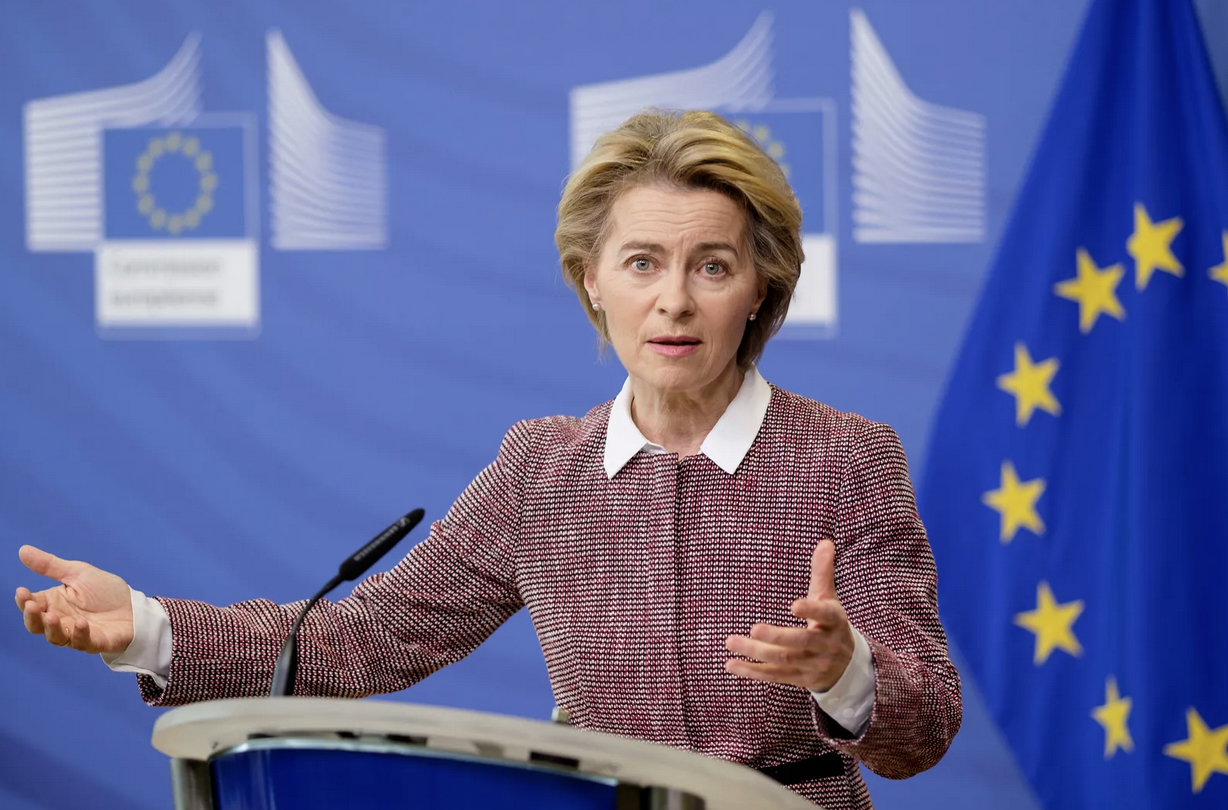
Ursula von der Leyen continues to describe the US as an ally and partner, even as Denmark warned that Donald Trump was intent on “conquering” Greenland, highlighting how deeply ingrained the EU’s reflex to treat Washington as a friend remains.
Trump’s subsequent threat to impose tariffs on eight countries, including six EU states as well as Norway and the UK, unless Greenland were sold to the US, further undermined the transatlantic alliance and exposed the failure of Europe’s strategy of appeasing him.
Critics point to von der Leyen’s decision to sign a trade deal heavily skewed in favour of the US, which many saw as a humiliation after the EU agreed to eliminate tariffs on US goods while accepting high duties on its own exports.
That deal, defended at the time as a source of stability in an unforgiving world, is now under fierce attack across the European parliament, uniting parties from the far left to the far right against it. The unspoken rationale for accepting such unequal terms was Europe’s continued security dependence on the US, particularly over Ukraine, a reliance that makes EU leaders hesitant both to confront Trump and to explain this dependence to their own citizens.
Yet Trump’s pressure over Greenland may have gone too far, prompting renewed talk of deploying the EU’s powerful anti-coercion instrument and raising the question of whether, as the transatlantic relationship undergoes historic change, Europe will finally abandon appeasement for confrontation.
PHOTO: Thierry Monasse
SUBSCRIBE TO OUR FREE DAILY NEWSLETTER: If you would like to support our independent journalism at Good Morning World, please subscribe to our daily newsletter. It’s FREE and appears 7 mornings a week. As we prepare to install a fully-automated sign-up, in the meantime please send an email with the word SUBSCRIBE to ianrbrodie@gmail.com