
In a sterling piece of journalism, the left-leaning Guardian newspaper has exposed how a significant number of property developers, many with close ties to Israel, are currently jostling to pick up potentially very lucrative contracts for the redevelopment of Gaza.
Trump administration insiders, donors to Trump, and other politically connected Republican businesses are circling to pick up future humanitarian aid and reconstruction work, even as the territory remains devastated and governance arrangements are still up in the air.
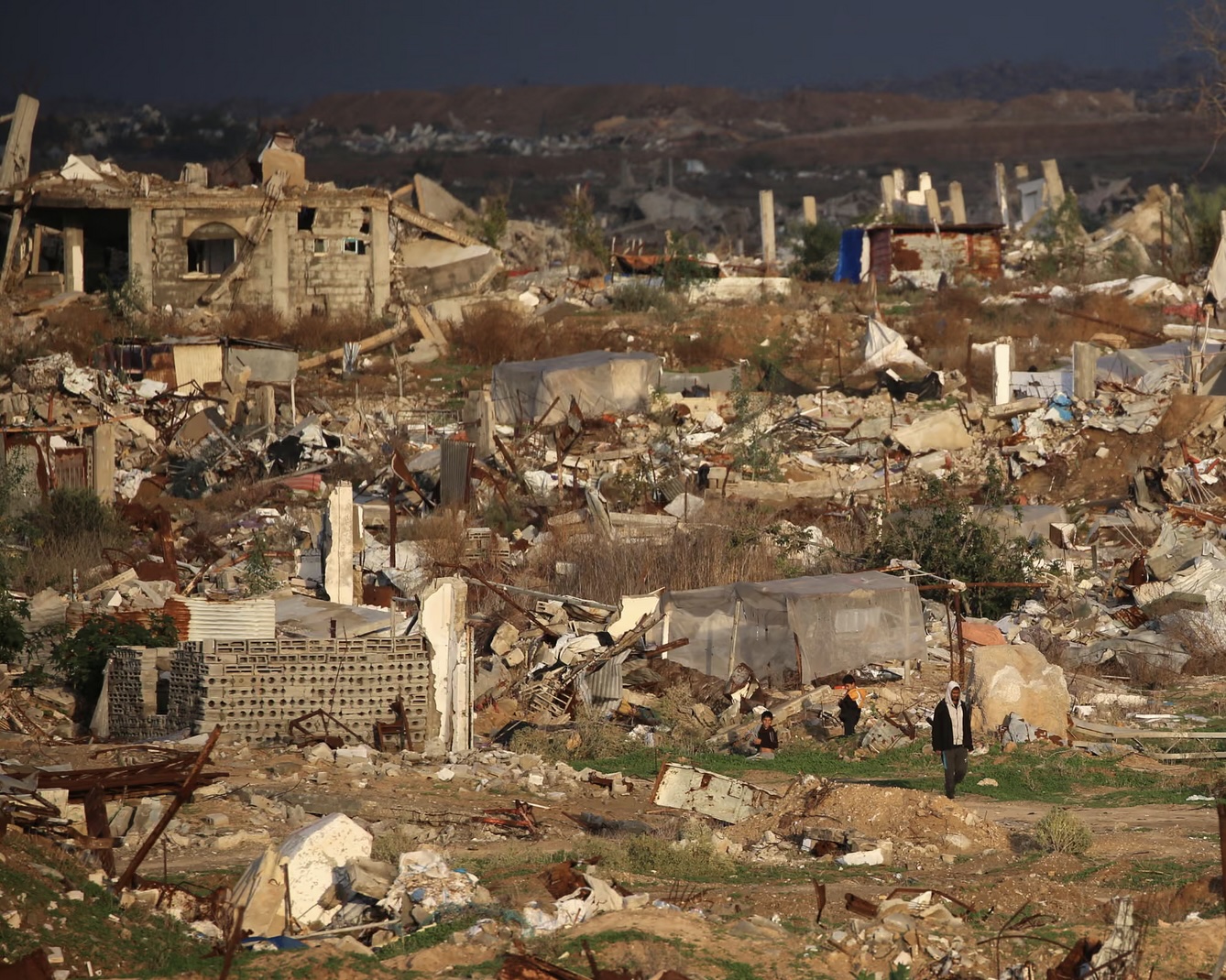
The background is that after two years of Israeli strikes roughly 90 percent of Gaza’s buildings have been damaged or destroyed and the United Nations estimates reconstruction could cost as much as $70 billion, creating enormous commercial incentives for companies specialising in construction, demolition, transport and logistics.
Despite the scale of need, long-term contracts cannot yet be issued because the UN-endorsed Board of Peace, chaired by Donald Trump and intended to administer Gaza, is not yet , and the newly created Civil-Military Coordination Centre has only a limited mandate.
Alongside these formal structures, the White House has created its own Gaza taskforce led by Jared Kushner, Steve Witkoff and Rabbi Aryeh Lightstone, operating in parallel to international and multilateral planning efforts.
Two former officials linked to Elon Musk’s “Doge” initiative to slash US government staffing are now central to these discussions, leading conversations on humanitarian aid and postwar reconstruction and circulating detailed slide decks outlining logistics plans, costs and warehouse locations.
US contractors are already positioning themselves for what they see as lucrative opportunities, including Gothams LLC, a politically connected firm previously awarded a $33m contract to help run a controversial Florida immigration detention centre known as “Alligator Alcatraz.”
According to documents and multiple sources, Gothams was widely viewed as having an inside track to secure what could have been its most profitable contract, though its founder, Matt Michelsen, said after inquiries from the Guardian that he had decided to withdraw, citing security and reputational concerns.
The White House Gaza taskforce declined to answer detailed questions from the newspaper, with spokesperson Eddie Vasquez dismissing the reporting as premature and insisting that planning remains at an early stage, with many ideas under discussion and no final decisions made.
Meanwhile, sources say contractors have been traveling to the region to meet influential US officials and potential partners, with one veteran contractor describing the atmosphere as a familiar scramble to profit, likening it to Iraq or Afghanistan reconstruction efforts.
In November, the UN endorsed Trump’s plan for Gaza, even as visions diverge sharply: Trump and Kushner have floated ideas associated with luxury development, while much of the international community stresses rebuilding Gaza as a livable home for its 2.1 million Palestinian residents under ongoing Israeli control and restrictions.
As planning intensified, two former Doge officials were sent to the region, including Josh Gruenbaum, now a senior adviser to the taskforce, and Adam Hoffman, a 25-year-old Princeton graduate widely described by sources as a driving force whose views are perceived as decisive.
Hoffman’s background includes early conservative activism, brief service in Trump’s first administration, and campus controversies at Princeton where he formally complained of anti-Semitism, and he has reportedly been soliciting proposals for a new Gaza logistics framework.
Kushner, Witkoff, Lightstone, Gruenbaum and Hoffman are all Jewish, which is possibly a co-incidence and of no importance whatsoever, although given the fact that Gaza is home to more than two million Arabs who have so far survived the Israeli onslaught but have no say in the reconstruction of their shattered land, there is reason to believe that pointing out the similarity in background could be construed by some as anti-Semitic, at least in the current climate.
Meanwhile, a planning document attributed to Hoffman, labeled “Sensitive but Unclassified,” outlines a “Gaza Supply System Logistics Architecture” centred on appointing a single “Master Contractor” to manage 600 humanitarian and commercial truckloads per day.
The proposal suggests charging $2,000 per humanitarian truck and $12,000 per commercial truck, a model that could generate an estimated $1.7bn annually in fees, underscoring the enormous financial stakes embedded in humanitarian logistics.
Control of trucking is critical because Gaza has long depended on imports under Israeli blockade, with prewar averages of about 500 trucks per day, a flow that has since been sharply curtailed despite ceasefire provisions calling for 600 daily aid trucks.
The future role of the UN and established humanitarian organisations remains uncertain as Israel controls access permits, while critics such as philanthropist Amed Khan condemn the planning as detached from humanitarian realities and lacking any serious focus on medicine or medical equipment.
Homes and buildings destroyed by the Israeli military in the Nuseirat refugee camp in the central Gaza Strip, on 13 December 2025. Photograph: Eyad Baba/AFP