
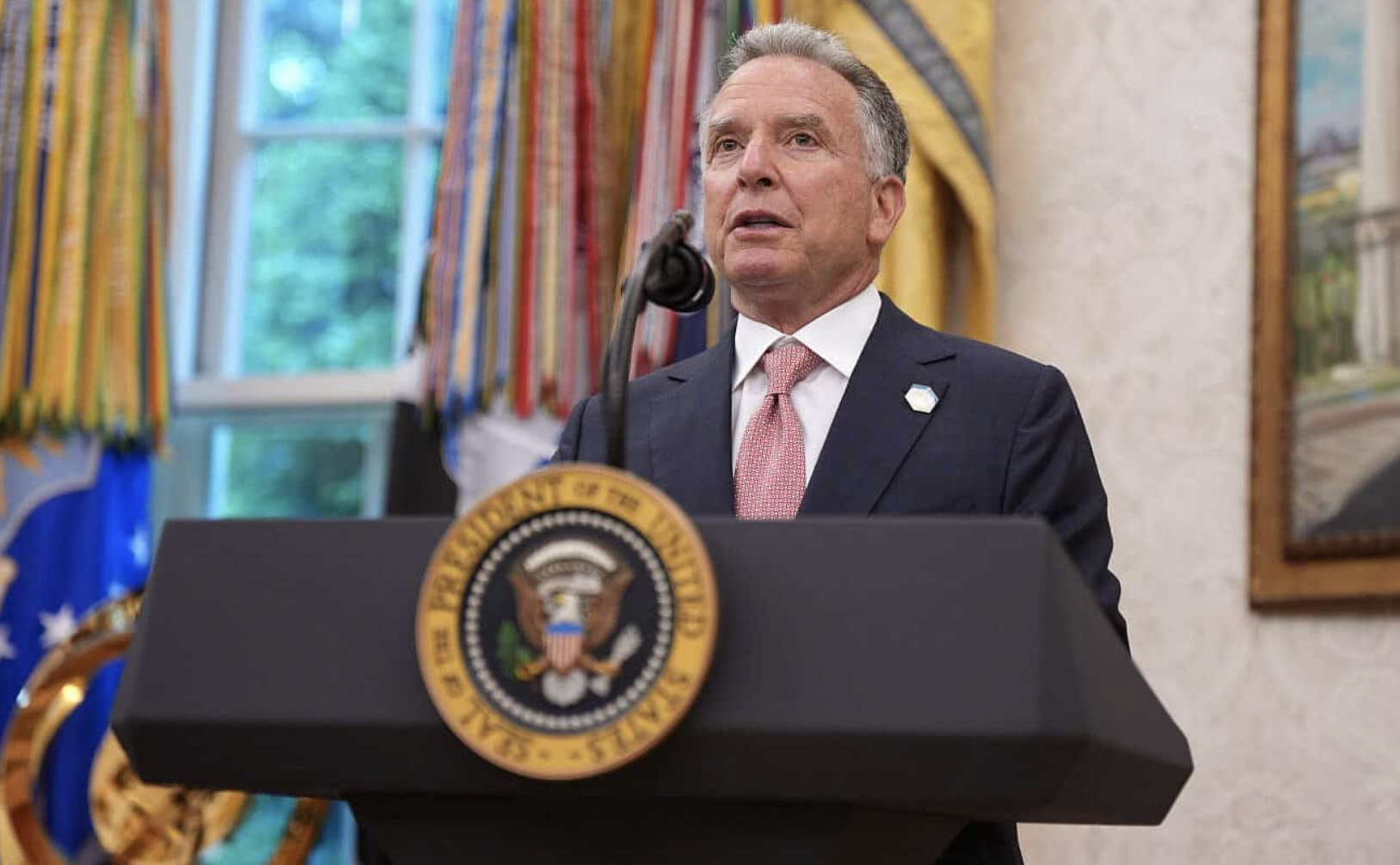
While EU leaders trive to decide the fate of frozen Russian assets before sanctions expire in January, the so-called Witkoff proposal has emerged as a major point of contention.
The plan, attributed to US envoy Steve Witkoff and his Russian counterpart Kirill Dmitriev, would divide roughly $300 billion in frozen Russian funds into three parts. One-third would finance Ukraine’s reconstruction – under US management, with Washington taking 50% of any resulting profits.
Meanwhile, Europe would contribute an additional $100 billion from taxpayer funds, despite most frozen assets being held on European soil.
The remaining $200 billion would be funnelled into a joint US-Russia investment vehicle, effectively returning substantial capital to Moscow in exchange for ending the war. Critics argue this structure shifts the financial burden to Europe while allowing Russia to benefit rather than pay reparations.
Ukraine would also become reliant on a US-controlled reconstruction system, limiting its autonomy over recovery. European diplomats say US officials have privately urged EU governments to resist using the assets as reparations, insisting they be saved for a future settlement with Moscow instead.
Witkoff
PLEASE SUBSCRIBE TO OUR FREE DAILY NEWSLETTER: If you would like to support our independent journalism at Good Morning World, please subscribe to our daily newsletter. It’s FREE and appears 7 mornings a week. As we prepare to install a fully-automated sign-up, in the meantime please send an email with the word SUBSCRIBE to ianrbrodie@gmail com.